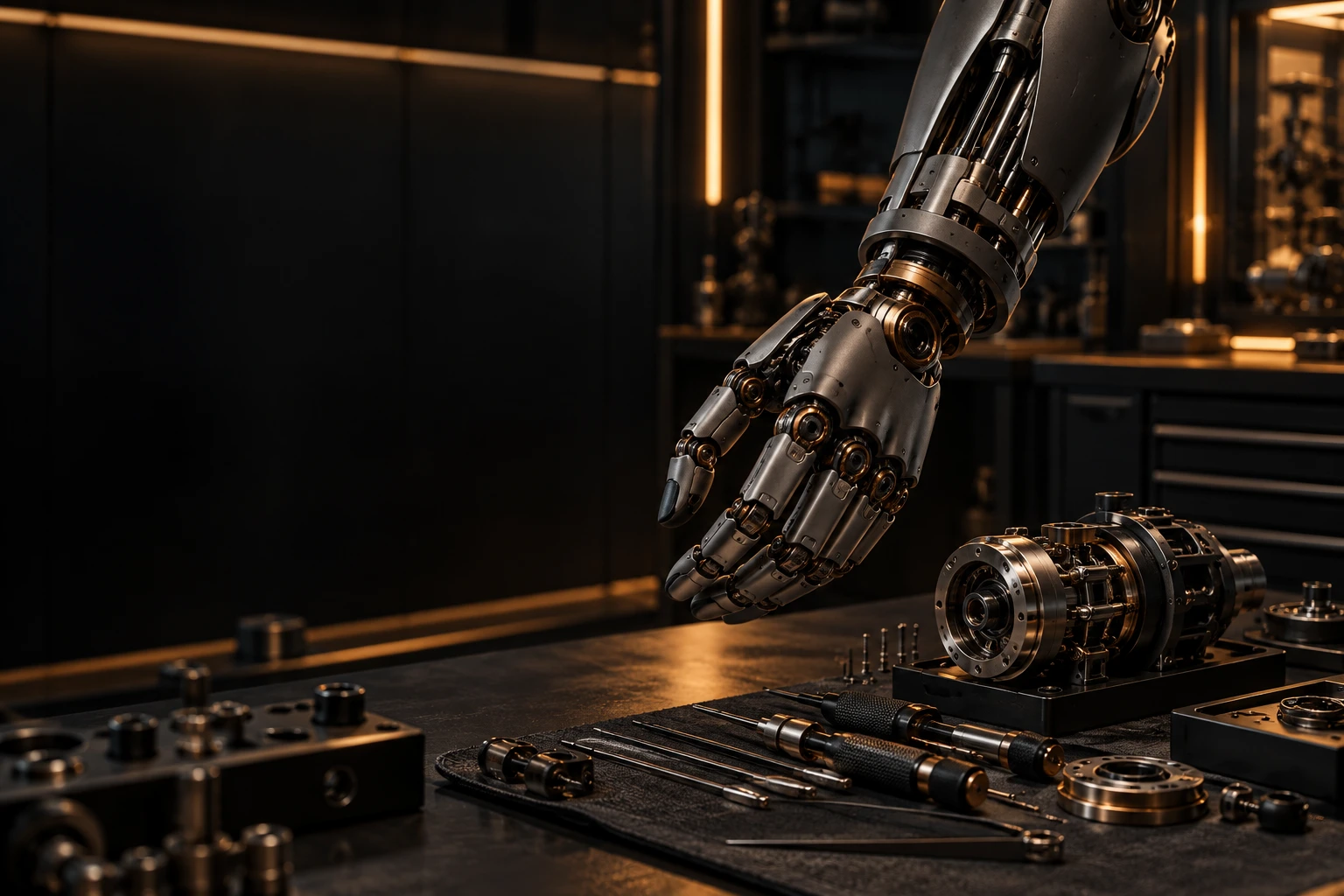
Machines deserve
a second mission.
Restore function. Recover value.
A disciplined route from a failed component
to an informed next move.
A fault is a signal.
Not the end of the system.
Zoom out.
Control the next move.
A service architecture you can inspect.
Explore the stages, then track your actual request.
Intelligent machines.
Specialist hands.
Dispatch through SWAT.network—with reviewed robot brand capability, a defined service mode, location coverage, and current qualification approval. No automatic routing to an unqualified general trade.
TECHNICIANS / OPEN SWAT ROBOTICS HUB →A request enters review first. Technician acceptance and scheduling confirmation follow a network assignment.
Make downtime
part of the equation.
Model the cost of waiting with your own assumptions. Use the result as a planning input—not a service quote or an outcome forecast.
The robot economy
needs more than
new robots.
It needs service routes, qualified people, evidence of work, parts conversations, and a clearer view of useful life.
Know what
you’re approving.
What is confirmed when I submit?
A successfully saved request receives a SWAT.network reference and private tracking key. It is not a confirmed technician visit, quote, or repair outcome.
How are technicians selected?
The robotics adapter requires current approval for the robot brand, service ZIP, and service mode. Active membership, an assigned House Manager, reviewed scope, and customer approval are required before dispatch into the existing network workflow.
Do you provide manufacturer warranty work?
Manufacturer authorization is not implied. Warranty terms, parts access, specialist capability, and approval to open or modify a unit must be confirmed before work proceeds.
Can I track an actual job?
Private tracking shows your intake stage and, after assignment, the linked network job status. Existing SWAT technician acceptance, work evidence, completion, and verification remain part of the service path.